
Composite Veneers vs Porcelain Veneers: Which Is Better?
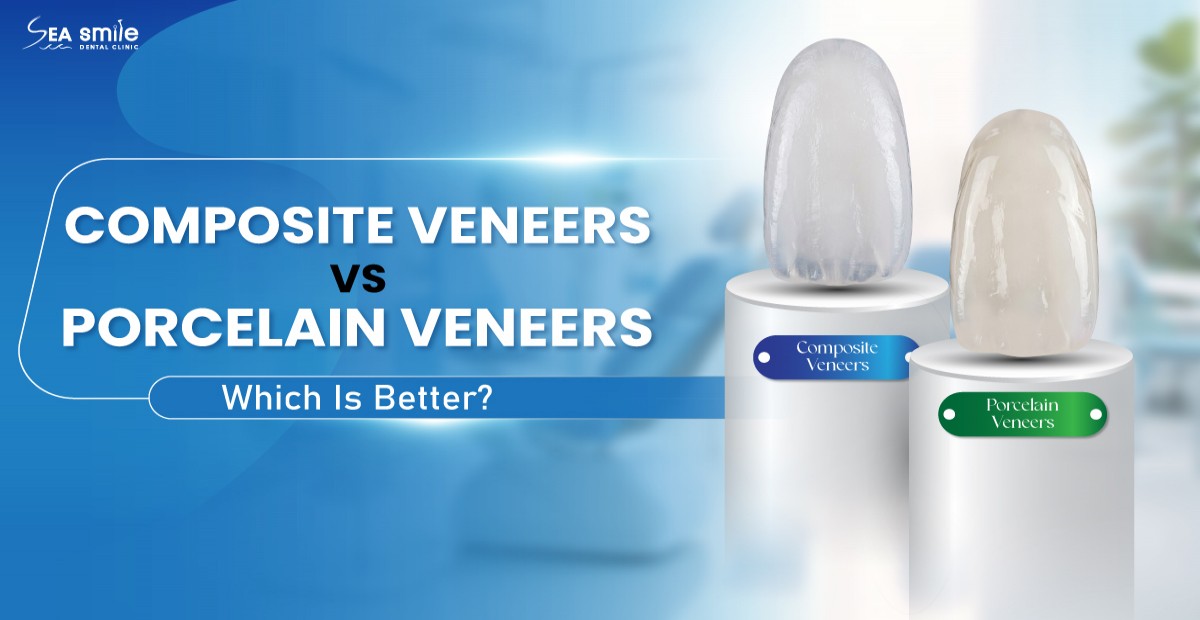
Both of these advanced cosmetic treatments possess the remarkable ability to beautifully enhance your tooth shape, correct severe discoloration, and flawlessly improve your overall dental alignment. Both options can create a highly noticeable, life-changing aesthetic improvement. However, this is where the similarities end. Composite and porcelain veneers differ significantly in their fundamental material durability, their initial financial cost, their long-term clinical longevity, and their overall structural stability.
For an international patient traveling to Thailand, the question is never simply "Which is better?". The real question is: "Which material is structurally and logistically right for my unique goals?"This comprehensive guide by our dental cosmetic specialists at Sea Smile Dental Clinic will break down the exact differences between composite and porcelain veneers, empowering you to make the most informed, long-lasting decision for your spectacular dental holiday.
What Are Composite Veneers?
Composite veneers (frequently referred to as "dental bonding" or "direct veneers") are created using a specialized, tooth-colored composite resin material that is applied directly to the surface of your natural tooth. The process involves direct, artistic sculpting by our cosmetic dentists right in the dental chair. They are immediately shaped, perfectly contoured, and polished to a high shine. Because they do not require off-site laboratory fabrication, composite veneers are incredibly efficient and are often entirely completed in just a single, straightforward clinical visit.
What Are Porcelain Veneers?
Porcelain veneers are vastly different; they are indirect, highly sophisticated restorations. They are ultra-thin, laboratory-fabricated ceramic shells that are permanently bonded to the front-facing surface of your teeth. The clinical process is much more extensive, typically involving meticulous tooth preparation, high-definition digital scanning or physical impressions, customized laboratory fabrication by master ceramists, and a final, permanent bonding phase. Because they require these multiple, highly structured steps, porcelain veneers are considered an irreversible cosmetic procedure.
The 5 Major Clinical Differences
To determine which option is best for your smile makeover in Phuket, we must analyze how these materials compare across five critical categories.
1. Aesthetics and Natural Translucency
When it comes to pure, uncompromising beauty, porcelain is the absolute gold standard. The primary advantage of porcelain veneers is their superior translucency and their ability to perfectly mimic the light-reflecting properties of natural human enamel. Porcelain offers a highly polished, glass-like surface and incredible long-term color stability. Composite resin can certainly look highly natural and beautiful when sculpted by an expert, but it fundamentally lacks the same depth of translucency as porcelain. Furthermore, the surface of composite resin may slowly lose its high-gloss shine and become dull over time.
2. The Tooth Preparation Process (Conservative vs. Irreversible)
A massive deciding factor for many patients is how much of their natural tooth must be shaved down. Composite veneers are incredibly conservative; they often require absolutely minimal or even zero enamel removal prior to placement. This allows for a highly conservative initial approach, making the procedure largely reversible if the patient ever chooses to remove them.
Porcelain veneers, however, require permanent enamel reduction. To ensure the ceramic shell does not look unnaturally bulky, our specialists must gently shave away approximately 0.3 mm to 0.7 mm of your natural enamel. Because this enamel cannot grow back, porcelain veneers demand a lifelong, irreversible commitment to dental restorations.
3. Lifespan and Structural Durability
If you are investing in a dental holiday to Thailand, you want your results to last. Porcelain is a significantly stronger material that is highly resistant to daily wear and tear. When planned perfectly, average porcelain veneers can easily last between 10 to 15 years, and often much longer with impeccable home care. They provide vastly greater long-term structural stability.
Composite veneers have a noticeably shorter average lifespan, typically lasting only 3 to 7 years. Because the resin is a softer material than ceramic, composite veneers are inherently more prone to surface wear, minor edge breakdown, and structural chipping.
4. Staining and Ongoing Maintenance
Do you love drinking dark coffee, red wine, or tea while relaxing in Phuket? Your beverage choices heavily impact your veneer decision. Porcelain is an impervious, glass-like ceramic, making it incredibly stain-resistant. Your porcelain veneers will remain exactly as white ten years from now as they are on the day they are placed. They require significantly less frequent maintenance.
Composite resin, conversely, is slightly porous. Over the years, composite is much more prone to absorbing stains from dark foods, beverages, and smoking. Furthermore, composite veneers may require periodic professional polishing or reshaping to maintain their initial luster.
However, if a fracture does occur, composite has a distinct maintenance advantage: it is much easier to repair directly and quickly in the dental chair. If a porcelain veneer fractures, it is significantly harder to repair invisibly, and the entire ceramic shell usually requires a complete, costly replacement.
5. The Financial Investment
The initial cost difference between the two treatments is substantial. Composite veneers are typically much less expensive. Because they are faster to complete and involve absolutely no outside laboratory fees or expensive ceramic materials, the initial financial barrier is much lower. Porcelain veneers are a premium service and are usually more expensive. The higher cost reflects the extensive laboratory fabrication, the high-grade ceramic material costs, and the multiple clinical steps required.
Making Your Decision: Which Should You Choose?
At Sea Smile Dental Clinic Phuket, we do not believe there is a universal "better" option; the correct choice depends entirely on your structural condition, your bite forces, your aesthetic expectations, and your long-term life goals.
- When Composite Veneers Are the Ideal Choice: We frequently recommend composite resin for patients seeking minor shape corrections, younger patients whose teeth are still maturing, or highly budget-conscious travelers. They are also fantastic for temporary aesthetic improvements or as a "trial smile". In fact, composite can act as a strategic first step—a reversible, transitional solution allowing patients to evaluate a new tooth length or shape for a few years before fully committing to irreversible porcelain.
- When Porcelain Veneers Are the Superior Choice: Porcelain is undoubtedly worth choosing when your aesthetic expectations are exceptionally high, or when absolute longevity is your top priority.
They are the preferred method for major, life-changing aesthetic transformations, long-term cosmetic plans, patients with a highly visible "gummy" smile line, or cases requiring the masking of significant, dark discoloration. If color stability is critical to you, or major structural changes are required, porcelain is the ultimate answer.
The Danger of Bruxism: Protecting Your Investment
Regardless of whether you choose composite or porcelain, you must protect your new smile from destructive mechanical forces. Patients who suffer from bruxism (subconsciously grinding their teeth during sleep) face a significantly higher risk of chipping their composite resin or completely fracturing their porcelain ceramics. While high-grade porcelain may tolerate general wear slightly better over a long period of time, uncontrolled, heavy grinding will actively shorten the lifespan of absolutely any dental restoration. If you have a history of grinding, the daily use of a custom-fitted night guard protection system is highly recommended by our specialists to safeguard your investment.
Vital Travel Logistics for International Patients
If you are flying from the US, Australia, or the UK to receive your smile makeover at www.thaidentalcenter.com, your travel itinerary plays a massive role in your material decision. Patients traveling for premium porcelain veneers must strictly consider the time required for laboratory fabrication. A porcelain case typically demands a minimum stay of 10 days in Phuket. You must be prepared for a temporary phase (wearing acrylic temporaries while your finals are made) and you must establish a reliable long-term maintenance plan with a dentist back in your home country. While composite veneers can be completed much faster—often in just a day or two—international patients must remember that composite will likely require more frequent cosmetic touch-ups or polishing in the future.
Balance Beauty and Longevity at Sea Smile Dental Clinic
Transforming your smile is a monumental decision. Before choosing your material, do not simply look in the mirror and ask yourself, "What looks good today?". You must think ahead and ask, "What will remain strong, bright, and stable five to ten years from now?". Elite cosmetic dentistry must always perfectly balance breathtaking beauty with unwavering longevity.
Are you ready to discover which veneer system is the perfect match for your unique smile? Reach out to the world-class aesthetic experts at Sea Smile Dental Clinic via www.thaidentalcenter.com. Send us your photos, and let us design a personalized, long-lasting cosmetic transformation for you in the spectacular tropical paradise of Phuket. Click to Book Now